
On the Pull at the Morgue
by Natalia Danjon
My kitten heels slice through the silence of the morgue. A whiff of formaldehyde attacks my nostrils as I trail in the pathologist’s footsteps. Six flights of stairs, endless doors, and a maze of corridors finally lead us to his office.
I imagined stiff feet under white sheets, but a rundown filing cabinet overflowing with black folders and a desk littered with papers brings me back to the reality that every post-Soviet office looks like this.
“What’s the name again?” The pathologist pulls a chair right next to his and invites me to sit. In a habitual gesture, he adjusts a few strands of hair over his bald patch. His belly bulges from the greyish scrubs.
“Vadim. Mukhin Vadim Mikhailovich.” My voice sounds distant and shaky.
I struggle to comprehend that my big brother, the only person who never failed to make me laugh, is in this building. Reduced to a name.
“Thirty-two, a stroke. Hmm… No autopsy, you say?” The pathologist glances at the screen, then peers at my knees. “You’ll need a bunch of papers.”
I nod. Anything but the image of Mum’s body wracked with sobs and her plea this morning. “Olya, if they open him up… my darling son — he’ll be cold in the ground.”
A chill runs through me. I smooth the hair on my arm. My skin is like a crisp cookie, kissed by the Cypriot sun, before a text from Mum cut my holidays short.
I barely remember my return flight to Russia.
“A little young for a stroke. Any substance misuse?” The pathologist traces an outline of my dress, then shifts in his chair.
I nod again. This morning, the priest called it an untimely death. There was no mystery for the family — my brother had been using for years. But he’d been clean since his last stint. Six months. Vadim repented, returned to work unloading cargo trucks, even fell in love with Lena, a stick-thin, blue-eyed accountant in killer heels.
“Start with a hospital release form, stamped and signed by the head of staff.” The pathologist lists the papers in a flat, official tone while his eyes drift up and down my legs. The visitor’s chair is uncomfortably close, and I catch him adjusting himself.
I keep an expression as cool as a cucumber, wishing for a longer dress. Men have looked at me this way before. If I smile, tilt my head, or allow my gaze to linger, he’ll ask me out. Or worse. I peer at the lock on the door, wondering how many times it clicked shut on vulnerable young women before.
Dull, straight hair clings to my head; moon craters mar my cheeks; and my belly wobbles. But men like him care little for these details. Surrounded by death, the cold arms of fear grip my lower back.
“When’s the funeral?”
“In two days.”
“Don’t forget a rehab release form, stamped and signed by the head of staff. I finish at four tomorrow.” He grins, leans over, and takes a deep breath.
Is he smelling me?
My blood runs cold, and my shoulders twitch. Before I realise what’s happened, his palm, wide like a butcher’s hand, drops on the back of my chair – his fingers curl around the ends of my hair.
“That’s very kind. Thank you.” I spring to my feet, jolting toward the door.
As I swing the door shut, I turn to check if he is following me. The pathologist is still behind his desk. I breathe out, unaware I’ve been holding my breath.
Something’s off. His head rests against the back of his chair, eyes closed, breathing shallow. His right hand has slid under the desk; his arm twitches in brisk, nervous caresses.
I feel sick.
Wary of stumbling into the wrong door, I flee the morgue. Once outside, I dash for the low brown building marked ‘funeral service’. Mum is where I left her, slumped against the wall in the funeral parlour. A cup of untouched, cold black tea is in front of her.
She wraps her frail hand around my arm. “Olya, what did they say?”
The list of papers looks terrifying. There is not nearly enough time before the funeral, but what can I say to a woman who has lost her son?
“It’ll be fine.” I thrust a bag of dried Crimea lavender into her hand. Nothing will ever be fine for my mum, but right now truth slices like a knife.
A tall, dark-haired bear of a man towers above us.
“Alexi’s so kind.” Mum motions to the funeral manager, who grins like a Cheshire cat.
“Shall we begin?” Alexi asks, handing me a thick folder.
With everything from wooden crosses to satin draping in the coffin, the folder looks like a deluxe menu. Inside, photos are large and clear, while prices, marked in the tiniest font, blur behind tears.
“We’ll take two wreaths,” I say, thumbing through the pages.
I hope we can get away with none, since artificial flowers end up in the trash once the grave settles. But Mum nods frantically at anything Alexi suggests.
Respectful and young, Alexi radiates the quiet confidence of a successful man. His charm might have worked in a bar, but no one smiles that much in this country.
“You’ll need at least four wreaths,” Alexi contradicts. His chiselled muscles stretch his shirt. “One with a red ribbon inscribed in gold from the grieving family, then another from the loving mother.” His dark eyes peer at Mum with well-rehearsed sympathy, transforming her into a sobbing mess.
Barely halfway through the folder, Alexi’s list is already in double digits. My wallet will soon starve. I sigh and reject the wreath bearing the inscription ‘loving sister.’
An hour later, Alexi sweet-talks me out of my savings and holidays for the next three years. Lena offers to drive Mum home. I crave a drink, and my stomach reminds me that my last meal was in Larnaca yesterday. Before the wretched text split my life into before and after.
After two hours at Klopovo Central Hospital, the rigid plastic seat hurts my back as though it were designed to increase suffering. I pray that the release form is ready quickly and consider nipping to a cafe when nurses rush down to the emergency room. From the depths of the corridor, a woman’s cries pour like a cascade. The afternoon rush halts as her screams grow into a wail. Everyone cranes their necks and shrugs.
I don’t know what happened, but my skin recognises a mother’s wail for her lost child. I want to erase the monstrous sound from my memory. A shiver creeps down my spine. Someone else’s grief cuts into mine as I push back the salt in my eyes.
I get to rehab as the sun is tired and red. If drug addiction had a smell, the walls of Klopovo Rehab Centre reek with its desperate stench. Visitors look like distressed ghosts, and residents resemble empty shells. The nurse orders me to wait but returns to say that the head of staff has already left.
Why did I never visit Vadim here? I’m such a coward.
The following day the bank is closed, the registry office misplaces Vadim’s birth certificate, and everyone at his work is in a frenzy after two cargo trucks got robbed in Novosibirsk. By the afternoon, the pile of papers I’ve collected threatens to bury me. I have grey hair now. When I stumble in front of the morgue, Lena volunteers to come along.
While I bite my nails, Lena insists the pathologist signs the release form at reception.
Do all accountants have commanding voices? She would have been perfect for Vadim.
The pathologist’s attention immediately goes to Lena’s killer heels. He blabbers about Italian cuisine, fishing for her number. As soon as his pen touches the release form, I snatch the damned paper from his hands, hook Lena by the arm, and make a run for it.
The morning of the funeral, the rhythmic clack of Lena’s killer heels fills the church. She smiles faintly, rubbing the silver bracelet Vadim has offered her. I return the smile. Vadim would’ve been happy she came.
“That’s a nice ring. Are those sapphires?” My godmother cradles my hand and nudges me toward the coffin. “Olya, you’re as white as a sheet. Why do you tremble? Stop taking everything so close to heart. Come, you must touch his body, or he’ll haunt your dreams.”
I yank my hand away and take a step back. Vadim would never dream of it. A few glimpses of his worn-out body from across the church, between ordering prayers and handing out thin beeswax candles, were enough. Deep wrinkles riddle his ashen face. Vadim looks years older, so much like our late alcoholic father, and nothing at all like I remember.
After Vadim went to prison for two years for trafficking, Mum told everyone work had sent him on a business trip. His first arrest tormented her. This time, she seemed peaceful. Watching her pack parcels with instant coffee and snacks, we half-believed the work trip story.
On the inside, Vadim got a job as a bell ringer at the prison church. He said cleaning the bell tower steps purified his soul. The priest told Mum that the place grew silent when Vadim made the bells sing. The melody touched the hidden strings in the heart. A month before Vadim collapsed on the street, the day Lena agreed to be his girlfriend, he opened up to me for the first time, looking serene and mature.
Someone touches my shoulder, and I watch the gravediggers take the coffin out of the church. With short haircuts, dressed in black puffer jackets, they look like they stepped out of a bad gangster film.
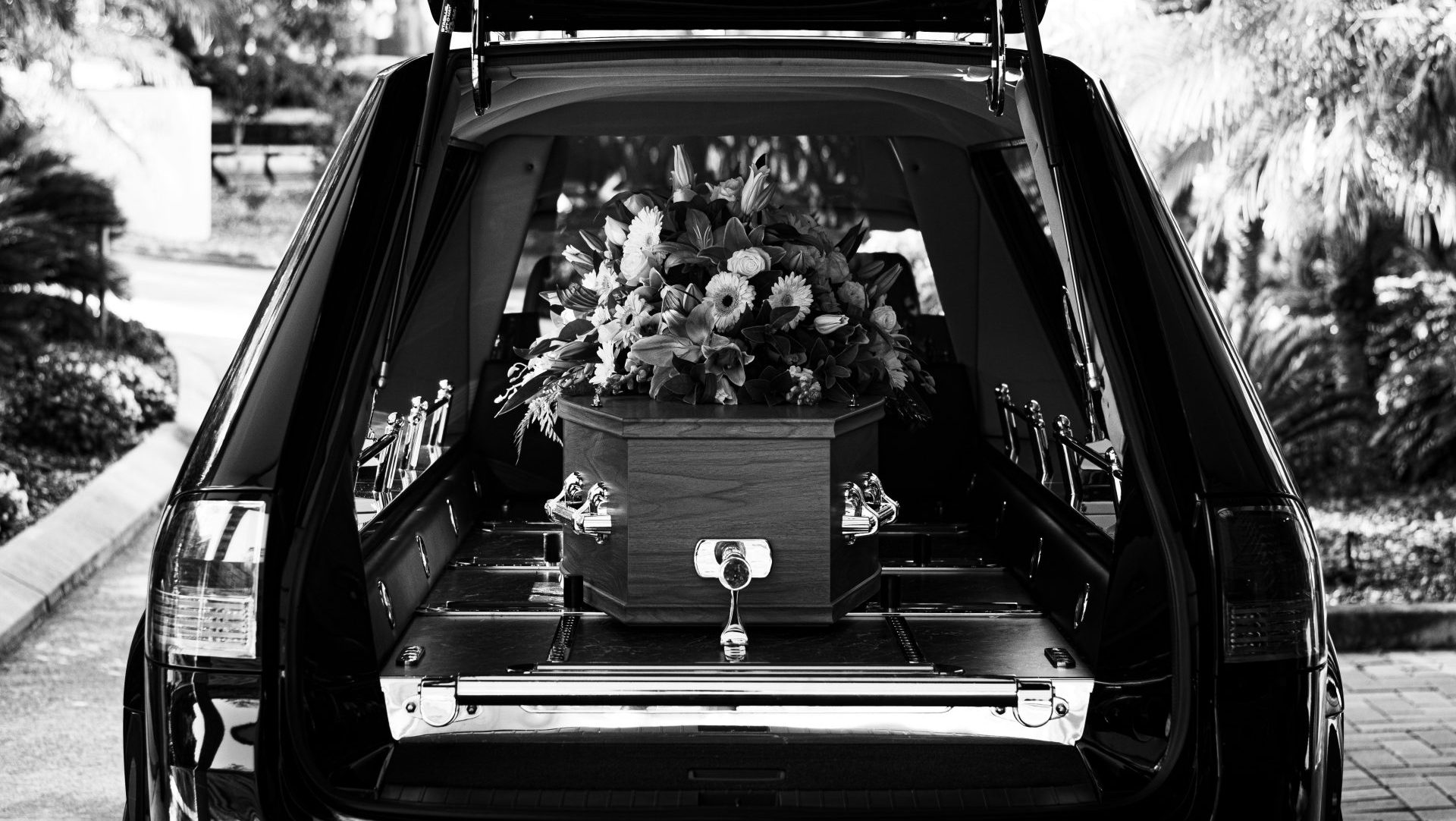
By the time the black minibus with shaded drapes charges toward the cemetery, I have no will to live. Wedged in the aisle, the coffin’s wooden sides bump against the seats around sharp turns. The Moscow region is as flat as an open palm, but Klopovo owes this serpentine road to Stalin’s love for mountain paths, because part of the road slithers to his dacha.
My family crowds an open grave, as two cemetery assistants pull me aside to haggle over pine branches. I gaze at the pine forest that hugs the cemetery, ready to run to the nearest tree and cut my own.
“What will line the bottom of the grave? Pine branches — it’s tradition,” the assistant insists. “It’s only a little extra.”
I’ll jump into the grave myself if this drags on any longer.
“I won’t pay.” My eyes are as cold as the grave.
The past three days have successfully challenged my moral compass. The assistant tries to get money out of Vadim’s friends, and I watch Lena reach for her wallet.
After the plain pine coffin is lowered into the grave, the gravediggers whisper into my ear that a tip is appropriate. Arms folded across their chests, eyes flooded with sympathy.
Nothing supports my grief better than a quick nip into my wallet.
It is impossible to explain to anyone in the funeral business that my mum is poor. There’s a reason most people save for their funeral. Even the basic one costs a fortune. I shake my head while disgusted looks and hushed voices condemn me for giving Vadim a cheap send-off.
“Devushka, when your time comes, you’d want to be sent off with respect,” the gravedigger guilt-trips me.
I’m unsure about the afterlife, but I’m sure that for our bodies, death is final.
“I won’t care then,” I snap. But my will cracks, and my fingers slip blue bills into the gravedigger’s greedy hands.
Mum’s pension equals just one hundred dollars. Prices in Klopovo rival those in Paris. Vadim won’t be upset. He never was about anything I did. There is nothing quite like losing a person who thought everything about you was good.
On the way home, no one speaks. The minibus feels enormous.
“Olya, come over for tea?” Mum stares in front of her, not blinking.
I need to lie down, forget the pressure and the misery, but I nod. Stepping out of the minibus, my ankle twists. I stumble, catching myself on the asphalt. There is no pain, at least not worse than what I’ve been carrying inside for the past three days. But my toe has doubled in size.
The X-ray room at Klopovo Emergency Room looks sterile. The air reeks of pain and disinfectant.
“There was a woman in here two days ago, about the same time. She wailed like… a wounded animal.” I try to attract the nurse’s attention, but she makes a point of not looking me in the eye.
“It’s an emergency room,” she says, helping me out of the protective vest.
“That cry was terrifying.”
She rolls her eyes, still not making eye contact, then a flash of recognition crosses her tired face. “Was it a holiday?”
“Yes, Children’s Protection Day.”
“I was supposed to be off,” she puffs. “Her son died… Walked out of the window.”
My stomach ties into a knot as I curse my curiosity. “He’s been admitted here six times,” she continues dispassionately. “An addict. Finally ended it.”
I gasp, longing to have stayed in the dark.
The nurse points at a faint hairline on my X-ray and frowns. “Your toe is fractured. There’s no need to cry. The plaster room’s second to the right.”