
The Right Thing
by May Grier
The springer bitch had whelped, and no one except for the girl had noticed. The dog nosed at each tiny, squirming body until she found the one she was looking for, before placing her jaws around his mute form and swallowing him down. She knew, instinctively, that he would not live like the others, that it wouldn’t be fair.
***
The family were all still at the table, the girls slightly, unknowingly, drunk on the brandy Peter had slipped into their hot chocolates without anyone noticing. Harry, the younger boy, was speaking without knowing what he was saying, talking to impress.
He stirred his pasta around the bowl. The sauce – expensive, bought from the stall in the high-end supermarket in town – had stained all of their lips and made them glow orange. Harry’s especially.
Annie was dying to tell him to wipe his mouth, but she knew it ran the risk of him telling her the same thing back, and she didn’t want Peter to comment something obscene, something about likening her to a pig. The wine always loosened him up, but it was never to his detriment, only to that of others. They were drinking a vintage her father had given her when she graduated. It had been typical of him – most girls her age got jewellery, or a wad of cash – Annie got a case of Puligny-Montrachet, a layer of fine dust coating each bottle.
Her father hadn’t come from money. He’d made it through farming, mostly arable. The interest in collecting wine came later in life, when he finally had time to enjoy the profits of the long harvest. To Annie’s devastation, he’d only been able to enjoy it for a single year. By the winter, he was dead: a blood clot in his heart.
She hadn’t wanted to open any of it, but Peter had insisted.
“Don’t be a fool. It’s not like you’re going to sell them on.”
At the very least, she’d wanted to make a toast to her father, but something about Peter’s face told her not to. He was giving her one of his silent stares, like a snake observing its prey.
She changed tack quickly. Arthur had an inter-school rugby match, a semi-final, the next day. They all clinked glasses – the girls with their cocoa mugs, which Annie had thought was an odd choice but said nothing – and wished him luck. The eldest boy bowed his head and took a small, almost negligible sip. He wasn’t supposed to drink before games, and he took the rule seriously, not like some of the others, but his parents were watching, and he knew this was good wine.
He looked over at his mother. He’d give it to her later. She’d never been one to turn down a glass – or two, or three, as it had been lately.
Fran found the puppies. She’d suddenly remembered and had sprinted out of the dining room between the main course and the pudding, slipping on the tiles in her sparkly tights.
“God, Fran – be careful!” Annie yelled, the wine settling into her blood. It, too, made her loose, made her lose her refinement, made her un-elegant. She knew this because Peter had told her, multiple times, after they’d been drunk together. But she didn’t care, not anymore. It was just about the only thing keeping her above water.
Anyway, it made her feel good.
The pups were squirming in the nest, trying and failing to suck. Annie had made it that afternoon, strips of egg cartons lining the whelping box she’d ordered online. Fran wanted to help them latch on, but the bitch raised her lip and uttered a low, quiet warning as she reached in. She crouched and watched them instead.
There were only four – she was expecting more. She wondered if something had happened, if a couple had been reabsorbed into the womb.
Fran brushed her hair out of her face, which was sticky with make-up and sweat. Was she enjoying herself? It was hard to tell. In the pantry it was cool and quiet. She leant her head back against the stone wall and closed her eyes, listening to the puppies’ noises. They sounded sweet and breathless, like each one was trying its hardest to live. She wondered what they’d do with them, whether she’d be able to keep one. She hoped her parents wouldn’t sell them all. It wasn’t as if they needed the money.
She heard someone padding across the floor. The other girl came in. Fran glanced up but didn’t move, still resting her head against the wall. The girl knelt down, and they both watched the puppies without talking.
“They remind me of guinea pigs,” Fran said finally, not able to stand the silence. “I think it’s the way they squeak.”
The girl sniffed. Fran wondered if it was laughter or if she just had a cold.
“We don’t know who the dad is.”
The girl stared at each pup, taking them in.
“That collie down the road, the one who always stands at the gate?”
Fran raised her eyes skywards, thinking. She’d caught the dog lurking around the henhouse a couple of times, a vague look of guilt in its white eyes. It was a possibility. The pups were mostly white with black ears and black saddles, like the bitch, but a couple had a grey tinge to them. The collie was blue merle and carried the deaf gene, though of course no one knew.
“It’s not like that farmer would’ve paid for him to have the snip.”
Fran was just regurgitating what her dad had said, but it was true. The farmhouse had holes in the roof, and the sheep looked awful, half of them lame. He only sheared them when the summer was nearly over, when the shearers charged less.
“We should probably go back.”
“Yes. Don’t tell the others though. I want it to be a surprise.”
Fran smiled surreptitiously, getting to her feet with unexpected difficulty, given how slight she was.
The girl’s mother was at the table, listening but not adding much to the conversation. She fiddled with her napkin ring. It was real silver – she could tell by the way it sat in her hand, gleaming in a secretive kind of way. Annie kept trying to offer her wine, but each time she politely refused, stating it went to her head and she was working tomorrow.
“All the more for us!” Annie said with forced – or was it? – joviality.
At dessert, it came out that the mother – Katie – was a nurse, and the girl – Rina – was hoping to be one, if she got a high enough grade in her biology next year.
“A bit of an odd choice, training to be a nurse in this economy?” said Peter.
Rina blushed and mumbled something about wanting to help people.
“I think it’s lovely. A very kind thing to do,” Annie said, looking straight at Rina and not at Peter, who was on his phone, pretending to be disinterested.
“And I suppose your colleagues are all from the ex-colonies? Coming to make a bit of money and send most of it back home to their families? Can’t blame them, of course…” He glanced up at Katie coolly.
It was Katie’s turn to redden now and try to formulate a response that was neither affirming nor overly argumentative, but there was no time, for Peter went on.
“I was down at the hospital the other week, just for a routine thing, mind, I wouldn’t touch the place if I had something seriously wrong with me – but that’s another conversation for another day – and I didn’t see a single white face. The nurses were mainly African. The cleaners too. I think I heard some of them speaking, is it, Nigerian?”
“Yoruba, maybe.”
“Sure, whatever, but even all the doctors were brown. That’s what got me. Indian, mostly, I think. There was one white guy, the radiologist, but he was Romanian – I had to ask, in the end, my curiosity got the better of me. Anyway, so that was that, but I couldn’t believe it, no English staff whatsoever. You two must be like an endangered species in there.”
Everyone shuffled uncomfortably in their seats, not knowing what to say. Annie, as usual, tried to save them.
“It must be nice, working in such a multicultural place. We’re a bit starved of that out here. I think everyone’s white. In this village, anyway.”
“Alex and Lyn are from Manila,” said Fran, bluntly.
“Oh yes, how could I forget! Such a lovely couple, settled in so well. They’re from the Philippines,” she added, in case they didn’t know.
From her seat, Katie caught Fran briefly rolling her eyes. Then there was another short silence, only breaking when Annie stood up suddenly to offer everyone a refill, her napkin, stained now, falling to the floor.
The ponies shifted in their respective boxes. The night had moved in quickly, and now they were alone in the dark. Their only companion was a feral cat who slunk along the walls above them like a warden, searching for rats. They dozed but were woken by the smallest of noises: a door slamming, the clatter of cutlery, a bark of laughter from inside the house.
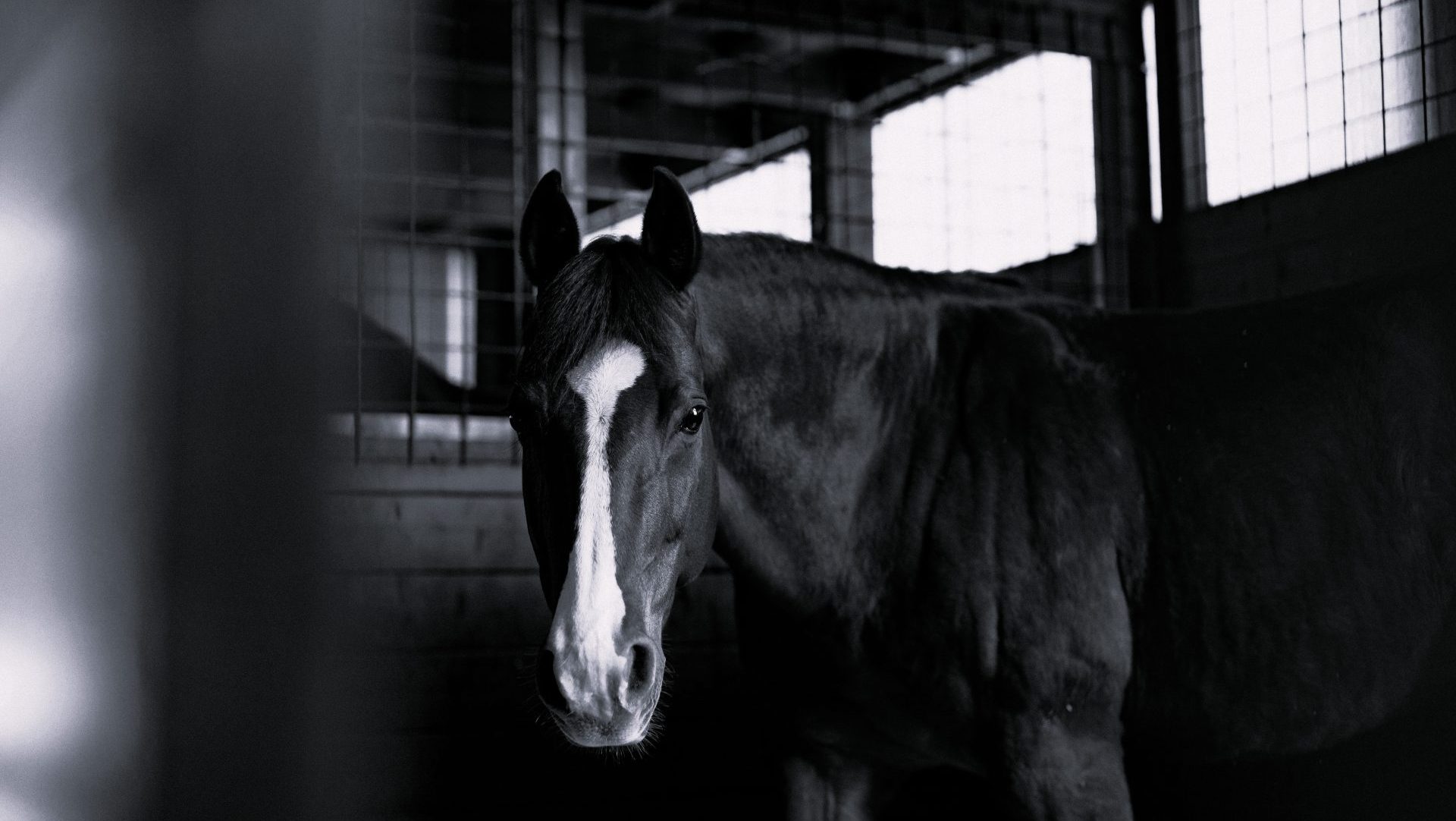
The mare was Welsh and bay. She was well into her twenties, fire still flickering quietly in her veins. Next to her, his head drooping in the corner of the box closest to her, the gelding was black and white and of indeterminate extraction. He was more docile but could break a faster pace when they were out on the roads.
The girl rode the gelding, and the mother rode the mare. There were never any questions about it. It was just the way it was. When they’d lost their field, Katie had thought they’d have to sell the horses and give the whole thing up. She worried about it for a long time and did not tell Rina.
It wasn’t just a hobby. It was something much bigger than that which they’d both grown into, rather than out of. The ponies were their next-of-kin, the small parcel of land and collection of sheds the home they preferred over the two-bedroom rented house in the estate on the edge of town.
The house Katie had tried with, but it was difficult to make a home out of a voided place. There was a certain uneasy atmosphere covering the whole estate which she couldn’t get to the bottom of until she did some searching online. She found that it was built on the grounds of an old convent. She looked a bit more and came across an article that mentioned destitute women.
So, she thought. They thought they could just raze it out of existence. People who thought that kind of thing only happened in Ireland were deluded.
It was funny. She’d remembered seeing a woman wearing a habit walking quickly down the other side of the road on the first day they were there. It was only for a moment, and then the woman had disappeared around a corner. The convent had never been rebuilt; Katie had checked. Perhaps it had moved somewhere local, and the woman was just a daytime nun. Her face had been unreadable, letting nothing in or out.
The mare let out a loud whinny as Arthur came in. He’d slipped out when the adults plus Rina had settled in the lounge for after-dinner drinks. There had been more wine for his parents, a cup of mint tea for Katie, and nothing for Rina, who perched on the edge of the sofa awkwardly, not knowing what to do or how to hold herself.
He couldn’t stand it. He had to get away. Fran was back in the pantry, and Harry had been sent to bed. Arthur knew he’d be awake past midnight, watching reels of boys his age doing stupid stunts, usually for notoriety or sponsorship. He liked that sort of thing too, found it too easy to get lost in, but then there was always training, which dragged him away from the phone for a few hours at least.
Harry didn’t have anything like that. Arthur worried for him more than he should. He knew that if he ever had kids – which felt unlikely, though he didn’t quite know why – he would ban them from using the internet until they were at least twenty. Twenty-five, even.
He patted the mare on the neck. He’d always had a soft spot – no, it was more than that – for horses. He’d ridden for a few years as a child, taking lessons with Fran. One winter they went out drag-hunting, and it had been one of the most exhilarating things he’d ever done. He’d stopped in the following year when he realised it was the wrong thing for boys his age to do. Fran had continued, as the girls could, without anyone questioning their motive or sexuality, going through a succession of loan ponies and then finally, her own, a bright grey called Fred.
Arthur had found himself jealous, watching them go out in the lorry to hunter trials every weekend whilst he was stuck indoors with only his dad and Harry for company, pretending to revise for his exams whilst Peter switched listlessly between the sports channels, trying and failing to make a beer last.
He’d started playing rugby properly by then, and it almost lived up to riding; the rush of adrenaline as he pounded over the pitch feeling almost the same as it was haring over hedges, the same smell of sweat and earth and blood.
The mare pulled at his sleeve with what was left of her front teeth, inquisitive at his newness.
He remembered, then, the pricked ears of the hired pony in front of him, overly keen, pulling the strength out of him and making him ache for days afterwards. He’d staggered down the corridors at school like an old cowboy, feeling oddly proud of himself but unable to say exactly why.
Soon the others came over. All except Peter, who had fallen asleep in his chair, his phone open on his lap. Annie had laughed at his snoring and chosen not to wake him.
“There he is!”
Arthur heard her voice, which was deeper and louder than usual because she was drunk. Hearty, someone in a pub had described her once. She’d been mortified and had gone on about it for days afterwards.
“I mean, really it’s just another way of calling a woman fat.”
He continued to stroke the mare, who had her eyes fixed on Katie. The gelding, too, had woken from his doze and was shifting in his stable, impatient for a feed.
Rina went straight to him and ran a hand down the centre of his face, wishing they hadn’t been left alone like this, that Peter and Annie weren’t so intent on hosting properly. The evening had dragged on for far too long.
Katie was walking slowly next to Annie, half-making sure she didn’t trip.
“Thank you so much for taking them in. I really mean it. I don’t know what we would’ve done…”
She really didn’t. Rina still wasn’t aware of how close she’d been to writing the adverts up.
“Oh, don’t. It was the least I could do. Honestly. The absolute. Bare. Minimum.” Annie was emphatic, her face flushed.
Arthur wondered what the favour had been. Probably something to do with school. His mother was on the governing board and was always doing something for one parent or another. He kept out of it. He went to lessons, to training, and then home again to eat and do his coursework.
There was usually a big party at the end of every term which he went to, full of people making out in the corners of dark gardens, high on cheap pills. Arthur remained on the periphery, swaying to the music, sometimes even stepping to it, but never going any further.
Annie had wanted to host one at theirs, but he’d said resolutely no. He knew he could see it in her eyes, that she wanted to string up lights all over the yard, turn one of the stables into a bar. Flirt with his friends. He imagined all the exposure it would bring. Having to lock his bedroom door to stop the people from piling in and messing it up. The accusations the next day of hiding something – a girl, perhaps – and of spoiling things. No. He could never.
She was desperate – he could sense this. Every evening in that huge house, his father cold or absent, was another knife into her heart. Arthur could let himself go out on the field, the ball both his commander and his solace. His mother had nowhere but herself.
But now there were the horses. Annie leant down and cupped the gelding’s nose in her manicured hands, planting a kiss on the exact place where Rina had previously run her hand.
“You’ll like it here. We’ll look after you just fine. Just fine.”
She spoke to him as if no one else was there, something Arthur had wanted to do, but failed to, earlier with the mare.
We meant Annie, and potentially Fran, though she was easily distracted these days and showed no sign of reigniting her childhood passion for all things equine.
“You won’t need to do anything. We’ll do it all,” Katie replied, almost angrily. She was desperate for it to work out. She was afraid of Annie – this woman she hardly knew – becoming resentful. It was easy, particularly in the long winters. To start hating, not the horses themselves, but all the life around it. Everything they didn’t ask for but had to be done anyway: the endless filling and emptying of buckets, the shifting of hay, brushing mud from tack and rugs and hooves and bodies. Of doing all this and then having to start it all over again the next morning as if the previous day hadn’t existed at all.
***
Katie was working on the day that Annie phoned.
“I can’t have anyone know.”
“Of course. We’re a confidential service.”
“I know the receptionist, the one who put me through to you. She’s a friend.”
Annie had had to alter her voice slightly so as not to be recognised.
“I can put you in under a different name, if you want? And book you in for a day she’s not working?”
She could feel the relief shudder through the phone.
“Yes please. If you could, I’d be grateful. Thank you ever so much.”
When it was over, Annie felt less emotional than she thought she’d be. She thought she’d be in floods. Instead, she felt strangely numb. She found herself wishing one of the kids was waiting in the car, and they could just go and go and get a pizza as if it was any other day.
The first thing she’d noticed when she went into the clinic room had been the tattoo on Katie’s arm. It was subtle: a few hoofprints done in black, nothing more. Usually she felt judgmental towards people with tattoos, inherited from both her parents and her social class, but there was something about it that reassured her.
“You like horses?”
Katie pulled on her gloves and looked down, smiling.
“Got two, back at home. Well, in a field we rent. They keep me on my toes.”
Annie smiled back, hazily.
“We’ve got fields at our place too. They’re empty now. My daughter used to have a pony, but he’s long gone. It’s a shame, all that space and no one in it. I used to like watching him going about his business.”
That was meant to be the end of it, but they bumped into each other at the big supermarket later on. Neither of them usually went in there, but they were both looking for something they needed but their shops didn’t have.
“Our field’s being sold,” Katie had said, not quite knowing why, cupping a packet of orzo in her palm like you would a small bird.
It was more than enough. The offer was made, quickly and without any pity, just an instinct Annie had for helping in times of need. She felt it was her main, if not only, strength.
Katie trusted her implicitly. Annie was one of those women who didn’t need to think about how to be kind. Kindness was, to her, as easy and as unnoticeable as breathing.
***
Back at the house, Fran was beside herself.
“One of the puppies has gone. The small grey with the pink nose. I can’t see him anywhere.”
Annie rushed into the pantry, feeling oddly light, her head clear.
“I didn’t know she’d even– are you sure she’s not put him somewhere? Sometimes they do that, hide them in strange places…”
They looked behind the trays of cannellini beans, the jars of organic honey and the dark chocolate chips. There was nowhere else, the pantry being the size it was.
“He was small, you said?”
“Yes,” Fran sobbed, rivulets forming down her cheeks. “He was so small. And so, so cute. He let me hold him in my hand. I wanted to call him Merlin, like the wizard. I don’t know why. He just felt kind of…magical.”
Annie only just stopped herself from rolling her eyes. You never named animals if you could help it, but you at least waited until they were out of immediate danger. In particular, you never named newborns. Mothers of any species could be vicious. She’d seen ewes sit on their lambs out of spite.
She didn’t tell Fran this, nor did she tell her that handling the puppy had probably made him more vulnerable to what had likely happened. Annie knew the dog well enough. She was guarded, never letting anyone get too close. Not like other spaniels she’d known, all over you in a second.
She wondered, sometimes, in the back of her mind, if Peter had ever hit her. Annie occasionally saw her flinch when he got too close, the whites of her eyes showing.
Out in the kitchen, she stroked her daughter’s back, who was sitting hunched over the breakfast bar, holding her head. She paused before speaking. She wondered if it was the right time to speak.
“Perhaps he was poorly, darling. Maybe she took matters into her own hands.”
Like all good mothers do, she wanted to add. The girl’s mouth bent itself into a silent cry. Arthur sat across the room from them both, glancing through his phone, not knowing what to say or do.
They’d settled the horses for the night, and now there was only the sound of them eating the hay Annie had bought from the farmer yesterday. Bales of it sat in the lean-to next to the stables, waiting for winter. The farmer had been glad of the money. It had been a terrible year, as most years were these days, for everything else.
“Not much more we can do for them now,” said Katie in the soft gleam of the single yard light. She pushed some hair out of her face. “In the morning we’ll sort through what’s already here. See what needs buying.”
“We should let Arthur have a sit on the piebald one day,” said Rina on the drive back.
“He likes the mare.”
“Would you?” Rina hesitated. “Let him ride her?”
“She’s strong enough. Whether he is – well. That’s another thing.”
There was a silence.
“You wouldn’t think it, big rugby guy like him.”
Katie thought of the boy, the way he’d leaned into the mare as if she was the only one there he could fully trust.
“Everyone’s got something.”
Rina looked at her but didn’t probe. The dark road carried them along home.
May Grier is from and lives in London, where she works as a nurse. She has had poetry published in Ink Sweat and Tears, The Soliloquist and has upcoming poetry in Gastropoda. This is her first published short story.